




Drinking water crisis looms as KRS, Kabini run dry
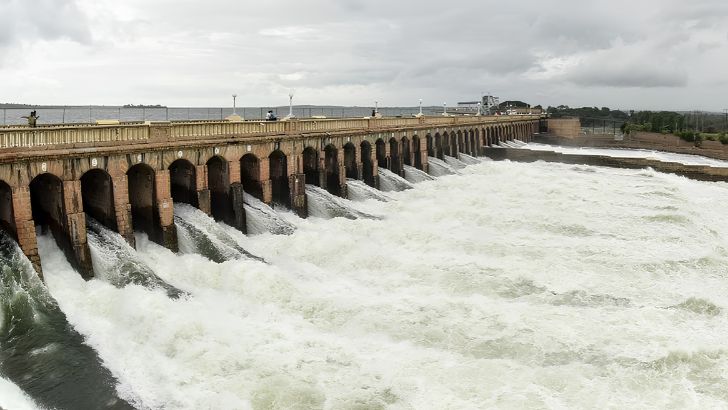
Kabini reached full capacity last May for the first time in 45 years, but is now nearing dead storage levels.
-
KRS reservoir has hit its lowest water level since 2018
Mysuru, 25 June
The dismal Southwest monsoon spell this year has led to a rapid decline in the water levels of the Krishnaraja Sagar Reservoir (KRS) in Srirangapatna taluk and the Kabini Dam in HD Kote taluk, triggering fears of a massive drinking water crisis.
The KRS reservoir recorded its lowest water levels since 2018. As of 25 June, the water level dam stood at 81.08 feet (11.390 tmc feet) against the maximum level of 124.80 (49.452 tmc feet). The inflow to the dam is maintained at 577 cusecs and outflow at 1,668 cusecs.
However, the drop from last year, when it recorded its highest ever June water levels at 109.60 feet of water, is startling. That means it now has nearly 28 feet of less water than last year.
Of the 11.390 tmc feet in the reservoir, 4.400 tmc feet of water is “dead storage” - unusable volume of water held at the very bottom of a dam or reservoir. Around 3.011 tmc feet is to be allocated for irrigation activities, while 3.979 tmc feet will be used for the drinking water needs of Mysuru, Mandya, Chamarajanagar, Bengaluru and other Cauvery river basin districts in the coming months.
“The Cauvery River basin districts need 2tmc feet of water from KRS every month to meet its drinking water needs,” KRS assistant engineer Kishore estimated.
The situation is even more grim for the Kabini dam. Last year, it reached its full capacity in May - a first in 45 years – due to heavy rains in catchment areas of Kerala’s Wayanad region.
Now, it has almost reached a dead storage level at 4.68 tmc, against its full capacity of 19.52 tmc feet, Kabini Reservoir executive engineer Vishwanath told Salar News. During the corresponding period last year, the water level stood at 15.89 tmc feet. This will also impact wildlife and livestock around the Bandipur, Nagarahole, BRT and MM Hills.
Vishwanath said that there is no sign of the inflow increasing in the coming months, and warned of a drinking water crisis. Other officials are hoping that the monsoon gains momentum soon to avert such a situation.
These dams serve as the main drinking water source for Mysuru, Chamarajanagar, Bengaluru and dozens of other towns and cities along the Cauvery river basin districts. They also ensure water for irrigation and lakes. Furthermore, they also are a lifeline for wildlife havens such as Bandipur and Nagarahole National Parks, BRT and the MM Hills wildlife sanctuary in the twin Mysore-Chamarajanagar districts.
Karnataka State Sugarcane Growers Association President Kurubur Shanthakumar said that if monsoon was playing “hide and seek” due to the El Nino conditions, the State government should “make alternative arrangements for meeting the drinking water needs and save water in the Kabini dam for coming months”.
Even though the HD Kote taluk has the Harangi dam and several other minor reservoirs like Nugu, Taraka and Hebbala, Shantakumar said that these water bodies are also running dry due to the scant rains.
Share Now

Leave a Reply
Your email address will not be published. Required fields are marked *
Other Stories




 (1).png)
.png)

.png)
